Showing posts with label motorcycles. Show all posts
Showing posts with label motorcycles. Show all posts
Monday, September 9, 2013
Panther Motors Recalls P150 and P50 Motorcycles Trikes for Parking Brake Defect
Panther Motors is recalling certain model year 2008-2009 P150 and P50 motorcycles.
(Editors Note: This is NOT the Panther Motorcycle Company. Panther Motors makes 3-wheeled trike-like vehicles.) These motorcycles (trikes) fail to conform with the requirements of Federal Motor Vehicle Safety Standard No. 122, "Motorcycle Brake Systems." The standard requires a strictly mechanical form of engagement of a motorcycle parking brake, whereas the parking brake on these motorcycles relies in part on hydraulic pressure.
434 units are affected.
Check out my Motorcycle Recalls feature for more details.
Read more »
(Editors Note: This is NOT the Panther Motorcycle Company. Panther Motors makes 3-wheeled trike-like vehicles.) These motorcycles (trikes) fail to conform with the requirements of Federal Motor Vehicle Safety Standard No. 122, "Motorcycle Brake Systems." The standard requires a strictly mechanical form of engagement of a motorcycle parking brake, whereas the parking brake on these motorcycles relies in part on hydraulic pressure.
434 units are affected.
Check out my Motorcycle Recalls feature for more details.

Friday, September 6, 2013
BMW Recalls 2007 2009 K1200 and R1200 Series Motorcycles for Brake Line Problem
BMW is recalling certain model year 2007 through 2009 R1200 and K1200 series motorcycles manufactured from August 2006 through May 2009.
Due to the current routing of the front brake lines, it is possible that during riding, and therefore associated vibration, the brake lines could be under strain. If the vibration/strain is significant, the brake line could split and start to develop a leak.
15532 units are affected.
Check out my Motorcycle Recalls feature for more details.
Read more »
Due to the current routing of the front brake lines, it is possible that during riding, and therefore associated vibration, the brake lines could be under strain. If the vibration/strain is significant, the brake line could split and start to develop a leak.
15532 units are affected.
Check out my Motorcycle Recalls feature for more details.
Wednesday, September 4, 2013
Kawasaki Recalls 2009 2010 EX650 Motorcycles for Brake Problem
Kawasaki is recalling certain model year 2009 EX650C9F/Fl and model year 2010 EX650CAF/Fl Ninja 650 motorcycles.
The right rear portion of the lower cowling can interfere with the operators foot while in the process of applying the rear brake.
676 units are affected.
Check out my Motorcycle Recalls feature for more details.
Read more »
The right rear portion of the lower cowling can interfere with the operators foot while in the process of applying the rear brake.
676 units are affected.
Check out my Motorcycle Recalls feature for more details.
Sunday, August 25, 2013
Motorcycles New 2010 Yamaha FZ16 Bison Street Fighter Edition

PT. YMKI soon will issue a new bike is Yamaha FZ16/Bison, Yamaha FZ16/Bison was outstanding issues according to the launching in February 2010. Yamaha FZ16/Bison has a 150cc engine capacity equal to the previous product is Yamaha Vixion. But from another aspect Yamaha Bison have differences with the Yamaha Vixion input system. Yamaha FZ16/Bison use carburetor Yamaha Vixion whereas injection system. There are other differences in the design of the bike is Yamaha Bison Street Fighter redundancy while Yamaha Vixion Sport style.
Specification New 2010 Yamaha FZ16/Bison Street Fighter Edition
Engine
Engine type Air-cooled, 4-stroke, SOHC, 2-valve
Displacement 153.0cm3
Bore & Stroke 58.0 × 57.9mm
Compression ratio 9.5:1
Maximum output 14PS / 7500 rpm
Maximum torque 14 N.m / 6000 rpm
Starting method Electric starter
Lubrication type Wet sump
Carburetor type BS26
Clutch type Constant mesh wet multiplate
Ignition type CDI
Primary/secondary reduction ratio 3.409 / 2.857
Transmission type Return type 5-speed
Chassis
Frame type Diamond
Suspension (front/rear) Telescopic / Monocross
Wheelbase 1,335mm
Brake type(front/rear) Hydraulic single disc / drum
Tire size (front/rear) 100/80-17 / 140/60-R17
Dimensions
Overall Length × Width × Height 1,975mm × 770mm × 1,045mm
Seat height 790mm
Wheelbase 1,335mm
Minimum ground clearance 160mm
Dry weight/Curb weight 126 kg / 137 kg
Fuel tank volume 12 liters
Engine oil volume 1.2 liters
Friday, August 9, 2013
Star Motorcycles Bolt Review
The reality TV stars have faded into obscurity. Blinged-out chopper sightings are fewer and farther between. The want ads are chock full of $50K customs at market-price markdowns.

As our man Tom Roderick pointed out in his preview, the Bolt has a nearly 59cc displacement advantage over the Iron, and is 33 pounds lighter than the Harley. The $7990 price tag is curious on a couple of levels; as appealing as that price point appears at first glance, it’s just nine dollars less than the Iron 883. Not that that’s not inexpensive, mind you. For that kind of coin, a brand-new, liter-size non-standard bike should be considered a bargain by any new-bike-shopper’s standards.
Nuts And Bolts
Thanks to its lively motor and responsive handling, the Bolt will make a great commuter for anyone with a desire to look cool while gettin’ there. That responsiveness comes from a short, 61.8-inch wheelbase and steering geometry (29-degree rake and 130mm trail) that’s sporty for a cruiser.

Despite its studly deportment, the Bolt is light and nimble on the road, and particularly compliant at slow-speed maneuvers. The 27.2-inch seat height and narrow saddle mean the 540-pound (wet) machine is an easy bike to walk into tight spaces when needed. But the bike’s lightness and maneuverability become even more manifest when it’s being hustled around town by 58 cubic inches of engine torque.
Street Style
“Street smart” can be defined as exuding style without calling too much attention to oneself. To that end, the Bolt is attractive through its confidence, not its fashion. Raw metal, modest styling and restrained cosmetics put forth an air of poise and self-assuredness – there’s nothing here to suggest arrogance or conceit, no accent chrome to be found except on the headlight ring and mirrors (the gas cap doesn’t count).
 The Star Custom Accessories division pitches in with a bullet-nose fairing, high z-type handlebar, fork gaiters, two-up seat, sissy bar with passenger backrest, small but stylish brown leather saddlebags, brass-finished accents, and more.
Bottom Line
 Whether or not the Star Bolt matches up with Harley’s Iron 883 is an evaluation best left for our upcoming shootout. But does the bike merit a price tag that’s in the same ballpark as the American icon’s? The answer is an unequivocal “Hell yeah.” I expected to like the Bolt, but I did not expect to enjoy riding it as much as I did. Ample power, responsive handling, great looking – it’s everything you could want in a city cruiser. Right off the showroom floor, it would make a cool ride for an experienced urban commuter and would also serve as a decent beginner bike – perhaps not for a completely inexperienced rider, but the young newbie who wants a bike he can be proud to ride for years to come could certainly do worse.If you’re shopping for a two-wheeled urban assault vehicle such as a Sportster 883 or even a Triumph Bonneville, Star just made your decision a whole lot harder.
Be sure to check out our gallery of images from the launch of the 2014 Star Bolt
Tuesday, July 16, 2013
Motorcycles and Passengers
The Passengers Job
A motorcycle passenger cant contribute much to the stability of the motorcycle, because any bike is easier to ride without a passenger. This is true no matter how skilled the passenger. Motorcycles are, by their basic principles, a single-person vehicle. Even the giant road bikes are safer, more stable, and more comfortable without a passenger.
So, the passengers primary job is to destabilize the vehicle as little as possible. The best way to do that is to mirror the actions of the rider as smoothly as possible. The easiest way to do what the rider does is to be attached to the rider. Women riding with men seem to automatically know this and keep a firm hold on the riders waist or hips.
The secondary job of a rider is to act as a second set of eyes and ears connected to a second brain. If two minds are better than one anywhere, its even more true on a motorcycle. There are obstacles and hazards coming toward you from every direction on a motorcycle. A good rider can cover about 180 degrees of hazard observation. A good rider with a good passenger can almost double that.
Motorcycles are poor places for daydreaming, even as a passenger. You should be watching, listening, and smelling for hazards and changes in the riding environment any time the vehicle is in motion. If you keep in mind that youre traveling on a "life-support mechanism" that needs constant attention, you may save your own life.
Before you go into motion, you should have a basic communication system in place. Dont count on being able to talk over the wind noise, unless you have a headset communication system. Headsets fail and you may need to quickly get the riders attention in an emergency, so, you still need a basic manual system. If an intercom is not used, the co-rider and rider need to establish communication signals. Suggested signals could be:
- Right turn - squeeze or tap the right arm
- Left turn - squeeze or tap the left arm
- Stop or slow down - squeeze or tap with both arms
- Other (bathroom break, I’m hungry/thirsty, cut that out!, etc.)
- For rider-to-co-rider signals, it’s easier to tap the right or left leg for turns and to lean back slightly as a signal for stopping or slowing.
With all of these precautions in place, we go riding.
Sunday, July 7, 2013
The Best 125CC Motorcycles In The World Victory Motorcycles
125 cc motorcycles could be regarded as the entry level motorcycle. The opening class for two wheel enthusiasts who want to rise to the motor class large-capacity machines. Of the many outstanding 125 motor, the motor is 125 cc engine which is the best.

It is Yamaha YZF-R125. Motorcycles produced since 2008 was won the hearts of lovers of the motor with a sexy appearance. Yamaha YZF-R125 to bring 124 cc engine capable of spraying up to 15 bhp power to drive this motorcycle sped up the top speed of 75 mph, or about 120.7 miles per hour.

This is a Honda VT125 Shadow. Since born in 1999, Honda Shadow VT125 direct iron horse lovers flirting with touring a macho display. These motors are born with 125 cc engine-powered 15 bhp and torque to 8 ft-lb peak speed 70 mph or 112.6 km / hr.

This is the Honda CBF125. This motor had just been born in 2009 and then, but was able to hook the hearts of many people with its distinctive design. Especially in the gas tank which has a unique cover of the tank. Honda CBF125 reinforced engine-powered 11 bhp 125 cc with a top speed of up to 70 mph or 112.6 km per hour.

This is the Honda CG125. Viewed from when I first appeared in 1975, the motor is arguably quite elderly. But it turned out, though still carrying the old design, the Honda CG125 was still able to attract many consumers. This motor holding 124 cc engine with an output of 11 bhp and a torque of 7 ft-lb with a maximum speed reaches 65 mph or 104.6 km per hour.

This is a Suzuki GN125. When viewed from the travel career, practically Suzuki GN125 only short-lived, because the motor with the retro look of the production was discontinued in 2001 although the newly produced in 1994. But despite the short-lived, looking Suzuki GN125 been able to attract a retro shape and support engine-powered 124 cc 12 bhp and topspeed 70 mph or 112.6 km per hour.

This is a Honda XL125V Varadero. Ala-style motor bike was successfully performed ENDURO stocky with a line that becomes the main design. Honda XL125V Varadero has the power to 15 bhp with 8 ft-lb torque applications thanks to the 125 cc engine that is able to bring this motor to run until 72 mph or 115.8 km per hour.

This is the Aprilia RS125. From row 10 best bike, Aprilia RS125 is a living legend. This motor is also the only non-Japanese motorcycles in MCN list but has the ability to run most quickly and reached 93 mph or 149.6 km per hour. And the sporty looks and exotic is typical Italian motors.

It is Yamaha YBR125. First produced in 1995, Yamaha YBR125 appear simple with makeshift appearance. But it is his simplicity that made the motor-engine-powered 124 cc 10 bhp with a top speed of 70 mph or 112.6 km per hour was so well liked.

This is the Honda CBR125R. Honda Motor sport is smaller than the entry-level motor that has the ability pretty cool. Honda CBR125R born in 2004 to supply power to 13 bhp and top speed of 70 mph or 112.6 km per hour from its 125 cc engine.

This is the Suzuki RV125 Van Van. Though he looks retro, do not think this is the motor time immemorial. Because Suzuki RV125 Van Van is a Suzuki motorcycle manufactured since 2003 Until now. With bright retro look and support engine-powered 124 cc 12 bhp and top speed of 60 mph or 96.5 km per hour, the Suzuki Van Van RV125 Able to attract the hearts of lovers of two-Wheeled world. (Dock Motorcycle)
New 2010 BMW R1200R Motorcycles
2010 BMW R1200R Motorcycle
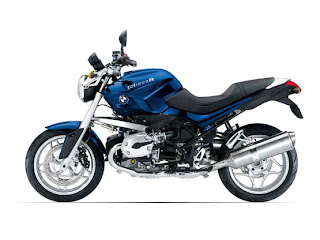
The latest version of BMW Integral ABS and Automatic are stability control, and BMW 1200 R is the sure-footed and interesting. This is very precise thanks to Telelever front suspension that is claimed as a low-gravity suspension bike. Now every turn will be the experience that speeds your heart rate as you climb the BMW R 1200 this. With a capacity of 1200cc engine produces output of 109 bhp and 115 Nm of torque. The suspension is perfect no problems at all with the weight of 223 kg (fully fueled). Combined with exemplary safety equipment, modern yet timeless designs, high quality and sporty, the BMW R1200R a truly multi-talented motorcycle.
Features and Specifications:
Standard Equipment:
Heated Grips
Closed 3-way Catalytic Converter
Available Equipment:
Anti-Theft Alarm System
Low Seat (770mm)
High Seat (830mm)
Luggage Brackets
Windshield
White Turn Indicators
Lowering Kit (750 mm)
Safety Package:
Tire Pressure Control
Automatic Stability Control
ABS Brakes
Equipment Package 1:
On Board Computer
Centre Stand
Equipment Package 2:
Chromed Exhaust
Electronic Suspension Adjustment
On Board Computer
Centre Stand
Touring Package
Chromed Exhaust
Luggage Rack and Brackets
Sport Windshield
On Board Computer
Centre Stand
White Turn Indicators
Comfort Seat
2010 BMW R1200R - USA Specifications US MSRP: $12,795 - 14,895 USD
Engine
Type Air/oil-cooled flat twin (Boxer) 4-stroke, one camshaft and four valves per cylinder, central balancer shaft
Bore x stroke 101 mm x 73 mm
Capacity 1170 cc
Rated output 109hp (80 kW) at 7,500 rpm
Max. torque 85 lb/ft (115 Nm) at 6,000 rpm
Compression ratio 12.0 : 1
Mixture control / engine management Electronic intake pipe injection/BMS-K digital engine management with overrun fuel cut-off, twin-spark ignition
Emission control Closed-loop 3-way catalytic converter, emission standard EU-3
Performance / fuel consumption
Maximum speed Over 125 mph (200 km/h)
Fuel consumption per 100 km at constant 90 km/h 4.1 l
Fuel consumption per 100 km at constant 120 km/h 5.5 l
Fuel type Unleaded premium
Electrical system
Alternator three-phase alternator 600 W
Battery 12 V / 14 Ah, maintenance-free
Power transmission
Clutch Single dry plate clutch, hydraulically operated
Gearbox Constant mesh 6-speed gearbox with helical gear teeth
Drive Shaft drive
Chassis / brakes
Frame Two-section frame consisting of front and rear sections with load-bearing engine-gearbox unit
Front wheel location / suspension BMW Motorrad Telelever; stanchion diameter 35 mm, central spring strut
Rear wheel location / suspension Cast aluminium single-sided swing arm with BMW Motorrad Paralever; central spring strut, spring pre-load hydraulically adjustable (continuously variable) at handwheel; rebound damping adjustable
Suspension travel front / rear 4.7 inches (120 mm) / 5.5 inches (140 mm)
Wheelbase 58.9 inches (1495 mm)
Castor 4.7 inches (119 mm)
Steering head angle 62.9°
Wheels Cast aluminium
Rim, front 3.50 x 17
Rim, rear 5.50 x 17
Tyres, front 120/70 ZR 17
Tyres, rear 180/55 ZR 17
Brake, front Twin disc, floating brake discs, 320 mm diameter, four-piston fixed calipers
Brake, rear Single disc brake, diameter 265 mm, double-piston floating caliper
ABS Optional extra: BMW Motorrad Integral ABS (part-integral)
Dimensions / weights
Length 84.4 inches (2145 mm)
Width (incl. mirrors) 34.3 inches (872 mm)
Height (excl. mirrors) 50.6 inches (1285 mm)
Seat height, unladen weight 31.5 inches (800 mm) (low seat: 30.3 inches [770 mm], high seat: 32.7 inches [830 mm])
Inner leg curve, unladen weight 70.9 inches (1800 mm) (low seat: 69.3 inches [1760 mm], high seat: 73.2 inches [1860 mm])
Unladen weight, road ready, fully fuelled 1) 492 lbs (223 kg)
Dry weight 2) 437 lbs (198 kg)
Permitted total weight 992 lbs (450 kg)
Payload (with standard equipment) 500 lbs (227 kg)
Usable tank volume 4.6 U.S. gallons (18.0 l)
Reserve approx. 1 gallon (3.0 l)
1) According to guideline 93/93/EWG with all fluids, fuelled with at least 90% of usable tank volume
2) Unladen weight without fluids
Touring Package: $13,795
* Saddlebags, Mounts & Locks
* Chrome Exhaust
* Heated Grips
* Onboard Computer
* Windshield Sport
* White Turn Signals
* Center Stand
* Luggage Grid
Standard Package: $14,145
* Heated Grips
* ABS
Premium Package: $14,895
* Heated Grips
* ABS
* On Board Computer
* White Turn Signals
* Center Stand
* Saddle Bag Mounts
Options
* Chrome Exhaust: $150
* Electronic Suspension Adjustment (ESA): $800
* Low Suspension: $250
* Heated Grips: $250
* Tire Pressure Monitor (TPM): $250
* On Board Computer: $295
* Windshield Sport: $250
* White Turn Signals: $60
* Anti-Theft Alarm: $395
* Integral ABS II (Disconnectable): $1,100
* Center Stand: $175
* ASC: $400
* Luggage Grid: $175
* Saddle Bag Mounts: $150
* Seat Low (30.3 inches): n/c
* Seat High (32.7 inches): n/c
*Actual price determined by dealer. Price excludes taxes, license, options and $495 in destination/handling charges. Prices and specifications subject to change without notice.

2010 BMW R1200R - Canada Specifications Canada MSRP: $14,950 CDN
Engine Type . . . . . . . . . . . . . . . . . . . . . . . . . Air/oil-cooled flat twin (‚Boxer‘)
4-stroke, one camshaft and four valves per cylinder, central balancer shaft
Bore / stroke . . . . . . . . . . . . . . . . . .101 mm x 73 mm
Capacity . . . . . . . . . . . . . . . . . . . . .1,170 cc
Rated output . . . . . . . . . . . . . . . . . .80 kW (109 hp) at 7,500 rpm
Max. torque . . . . . . . . . . . . . . . . . . .115 Nm at 6,000 rpm
Compression ratio . . . . . . . . . . . . . .12.0 : 1
Fuel / engine management . . . . . . . Electronic intake pipe injection/
BMS-K digital engine management with overrun fuel cut-off, twin-spark ignition
Emission control . . . . . . . . . . . . . . . Closed-loop 3-way catalytic
converter, emission standard EU-3
Performance / fuel consumption
Maximum speed . . . . . . . . . . . . . . .Over 200 km/h
Fuel consumption per 100 km
at constant 90 km/h . . . . . . . . . . . .4.1 l
at constant 120 km/h . . . . . . . . . . .5.5 l
Fuel type . . . . . . . . . . . . . . . . . . . . . Unleaded premium, octane rumber 98 (RON), automatic knock control permits operation with minimum octane number 95 (RON)
Electrical system
Alternator . . . . . . . . . . . . . . . . . . . .three-phase alternator 600 W
Battery . . . . . . . . . . . . . . . . . . . . . . .12 V / 14 Ah, maintenance-free
Power transmission
Clutch . . . . . . . . . . . . . . . . . . . . . . . Single dry plate clutch,
hydraulically operated
Gearbox . . . . . . . . . . . . . . . . . . . . . . Constant mesh 6-speed gearbox
with helical gear teeth
Drive . . . . . . . . . . . . . . . . . . . . . . . .Shaft drive
Chassis / brakes
Frame . . . . . . . . . . . . . . . . . . . . . . . Two-section frame consisting of
front and rear sections with
load-bearing engine-gearbox unit
Front suspension . . . . . . . . . . . . . . BMW Motorrad Telelever; stanchion
diameter 35 mm, central spring strut
Rear suspension . . . . . . . . . . . . . . . Cast aluminium single-sided swing arm with BMW Motorrad Paralever; central spring strut, hydraulic, hand-wheel-adjustable (electronic with ESA1), infinitely variable spring pretensioner, adjustable rebound dam-pening (electronic with ESA1)
ESA1 (Electronic Suspension
Adjustment) . . . . . . . . . . . . . . . . . . Shock absorber adjustment (rebound) dependent on the pre-selected basic spring setting (load condition), pushbutton adjustment
Travel front / rear . . . . . . . . . . . . . . .120 mm / 140 mm
Wheelbase2 . . . . . . . . . . . . . . . . . . .1,495 mm
Castor2 . . . . . . . . . . . . . . . . . . . . . . .119 mm
Steering head angle2 . . . . . . . . . . . .62.9°
Wheels . . . . . . . . . . . . . . . . . . . . . . .Cast aluminium
Rim, front . . . . . . . . . . . . . . . . . . . . .3.50 x 17"
Rim, rear . . . . . . . . . . . . . . . . . . . . .5.50 x 17"
Tyre, front . . . . . . . . . . . . . . . . . . . .120/70 ZR 17
Tyre, rear . . . . . . . . . . . . . . . . . . . . .180/55 ZR 17
Brake, front . . . . . . . . . . . . . . . . . . . Twin disc, floating brake discs,
ø 320 mm, four-piston fixed calipers
Brake, rear . . . . . . . . . . . . . . . . . . . . Single disc brake, ø 265 mm,
double-piston floating caliper
ABS1 . . . . . . . . . . . . . . . . . . . . . . . . BMW Motorrad Integral ABS
(part-integral)
Dimensions / weights
Seat height . . . . . . . . . . . . . . . . . . . 800 mm (low seat3: 770 mm,
high seat3: 830 mm)
Inner leg curve . . . . . . . . . . . . . . . . . 1,800 mm (low seat3: 1,760 mm,
high seat3: 1,860 mm)
Unladen weight, road ready4 . . . . . .223 kg
Dry weight5 . . . . . . . . . . . . . . . . . . .198 kg
Permitted total weight . . . . . . . . . . .450 kg
Payload (with standard equipment) 227 kg
Usable tank volume . . . . . . . . . . . . .18 l
Reserve . . . . . . . . . . . . . . . . . . . . . .approx. 3 l
Length . . . . . . . . . . . . . . . . . . . . . . .2,145 mm
Height (excl. mirrors) . . . . . . . . . . . .1,285 mm
Width (incl. mirrors) . . . . . . . . . . . . .872 mm

2010 BMW R1200R - United Kingdom Specifications
UK MSRP:
Basic VAT OTR Charges inc. VAT Total On Road
£8,442.56 £1,477.44 £330.00 £10,250.00
Engine
Type Water-cooled 4-stroke in-line four-cylinder engine, four valves per cylinder, two overhead camshafts, dry sump lubrication.
Bore x stroke 80 mm x 64,3 mm
Capacity 1,293 cc
Rated output 127 kW (173 hp) at 9,250 rpm
Max. torque 140 Nm at 8,250 rpm
Compression ratio 13.0 : 1
Mixture control / engine management Electronic intake pipe injection/digital engine management including knock sensor (BMS-K)
Emission control Closed-loop 3-way catalytic converter, emission standard EU-3
Performance / fuel consumption
Maximum speed Over 200 km/h
Fuel consumption per 100 km at constant 90 km/h 5,0 l
Fuel consumption per 100 km at constant 120 km/h 5,8 l
Fuel type Unleaded premium, octane number 98 (RON), automatic knock control permits operation with minimum octane number 95 (RON).
Electrical System
Alternator three-phase alternator 580 W
Battery 12 V / 14 Ah, maintenance-free
Power transmission
Clutch Multiple-disc clutch in oil bath, hydraulically operated
Gearbox Constant mesh 6-speed gearbox
Drive Shaft drive
Chassis / brakes
Frame Bridge-type, cast aluminium, load bearing engine
Front wheel location / suspension BMW Motorrad Duolever; central spring strut
Rear wheel location / suspension Cast aluminium single-sided swing arm with BMW Motorrad Paralever; central spring strut with lever system, spring pre-load adjustable (continuously variable) at hydraulic handwheel, adjustable rebound damping
Suspension travel front / rear 115 mm / 135 mm
Wheelbase 1.585 mm
Castor 104,4 mm
Steering head angle 60,4°
Wheels Cast aluminium
Rim, Front 3,50 x 17"
Rim, rear 5,50 x 17"
Tyre, front 120/70 ZR 17
Tyre, rear 180/55 ZR 17
Brake, front Twin disc, floating brake discs, diameter 320 mm, 4-piston fixed calipers
Brake, rear Single disc brake, diameter 265 mm, double-piston floating caliper
ABS Optional extra: BMW Motorrad Integral ABS (part-integral)
Dimensions / weights
Length 2.228 mm
Width (incl. mirrors) 856 mm
Height (excl. mirrors) 1.095 mm
Seat height, unladen weight 820 mm (low seat: 790 mm)
Inner leg curve, unladen weight 1,810 mm (low seat: 1,750 mm)
Unladen weight, road ready, fully fueled 243 kg
Dry weight 217 kg
Permitted total weight 460 kg
Payload (with standard equipment) 217 kg
Usable tank volume 19 l
Reserve approx. 4,0 l
Subscribe to:
Posts (Atom)